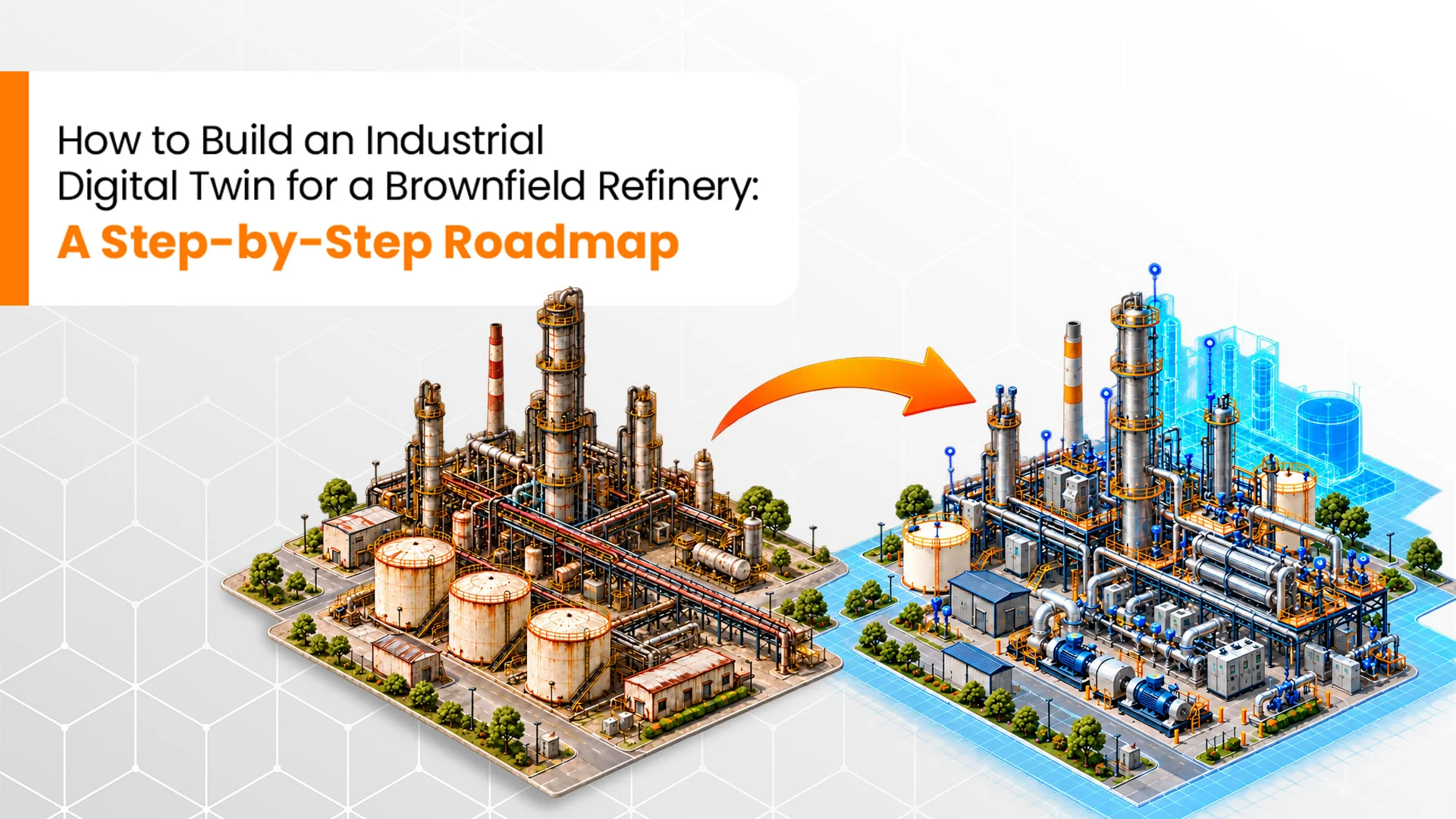
Building a digital twin for a new facility is one thing. Doing it for a refinery that has been operating for years is a different challenge.
The plant already has its own history. Equipment has been replaced, lines have been modified, instruments have been added, and operating practices have changed. Some of that information may be captured in engineering documents. Some may sit in maintenance systems or historians. Some may exist only in the knowledge of people who have worked on the unit for years.
An industrial digital twin is an amalgamation of good data, engineering context, capable models, and a clearly defined decision based on operating reality. A phased approach is more practical than trying to digitize the entire refinery at once.
Before Building the Twin, Understand the Plant You Have
The first question should not be which platform to buy.
It should be: How accurately can we describe the plant as it operates today?
For a brownfield refinery, this means reviewing the available engineering and operational information and identifying the gaps.
Typical sources may include:
- P&IDs and equipment records
- Instrument and asset information
- Process and control-system data
- Maintenance and inspection history
- 3D models and scans
- Historical operating data
This is more than documentation cleanup. If the digital representation does not reflect the asset as it is actually configured, later analytics and models will inherit those gaps.
Below are a few key steps you can follow to build an industrial digital twin for your brownfield refinery.
Step 1: Define What the Model Needs to Help You Do
A refinery can use a digital twin for many reasons. That does not mean the project should try to address all of them at once.
Start with the problem.
Is the priority equipment performance? Process optimization? Scenario testing? Maintenance planning? Better access to engineering information? Live operational monitoring?
The answer changes what needs to be modeled, which data matters, and how success should be measured.
A narrowly defined use case also makes it easier to demonstrate value before expanding the twin across the facility.
Step 2: Build the Data and Technology Foundation
This is where many digital twin projects encounter their first practical complication.
The required information is rarely sitting in one system. Process data may come from a historian or control system. Maintenance information may sit elsewhere. Engineering records can have their own formats and naming conventions.
The technology architecture therefore needs to account for:
- Where each data source resides
- How assets and tags are identified
- How information will be connected
- Which data needs cleansing or validation
- How updates to the physical plant will reach the digital model
The aim is not to collect every available data point. It is to establish the information needed for the chosen use case and make that information dependable.
Step 3: Build Against the Real Plant
A digital model may look convincing and still be wrong.
That is why validation deserves attention in a brownfield project. The model needs to be checked against the physical and operating reality of the refinery before it becomes the basis for important decisions.
This is also where digital continuity becomes important. The twin should not represent the plant only as it was when the project began. Modifications, maintenance activities, new equipment, and other changes need to be reflected over time.
Step 4: Prove the Approach on a Focused Use Case
This is probably the step that deserves the most practical attention.
There is a temptation to treat the entire refinery as one digital twin project. In reality, a focused application can tell you much more about what will work.
Pick a unit, asset group, or operational problem where better information could make a meaningful difference. Build around that.
For example, the first application might focus on:
- A critical process unit
- A high-value or failure-prone asset group
- A debottlenecking question
- An energy-intensive operation
- A maintenance or reliability problem
Then test it with the people who will actually use it.
Do the engineers get the information they need? Are the model outputs consistent with plant behaviour? Is the data arriving at the right time and in the right form? Does the system help someone make a decision faster or with more confidence?
These questions can highlight issues that are difficult to identify from a technology demonstration alone.
Step 5: Integrate AI When the Foundation Is Ready
AI becomes more useful once the underlying data and digital representation are in place.
Artificial intelligence in petroleum industry applications can be used to identify patterns in operating data, flag unusual behaviour, support predictive maintenance, or help engineers evaluate process performance.
The digital twin adds context to those outputs.
Instead of looking at an isolated trend, an AI model can work with information about the relevant equipment, process conditions, historical behaviour, and operating state. That makes the analysis more useful for engineering teams.
This is one area where digital transformation in downstream oil and gas can move beyond simply connecting systems. The goal is to connect information in a way that supports an actual operational decision.
Step 6: Expand Without Losing the Foundation
Once the first application has proved useful, the refinery can extend the twin to additional units, assets, or use cases.
But scaling should not mean starting to collect everything again.
The same principles need to carry forward:
Reliable data. Clear ownership. Validated models. Defined use cases. Regular updates.
Without following this process, a digital twin can gradually become outdated as the physical refinery changes.
For organizations pursuing digital transformation in oil and gas industry, this ongoing testing and maintenance is part of the transformation itself.
Ingenero’s Approach to Industrial Digital Twins
At Ingenero, digital twin development starts with the engineering problem rather than the technology layer.
We bring together process engineering, Applied AI, advanced analytics, and digital technologies. This allows the digital model to be developed around the process, equipment, and operational context it is expected to support.
For a refinery, that could mean starting with existing engineering information, identifying the gaps that affect the selected use case, and then building the required digital and analytical capabilities around them.
The result is a more practical path toward an industrial digital twin for refinery operations, with the scope shaped by what the facility actually needs rather than by the technology available.
Conclusion
A brownfield refinery already contains most of the components needed for a digital twin. The challenge is bringing them together and making sure they still describe the plant accurately.
That is why the strongest starting point is usually a defined operational problem, supported by an accurate and real-time view of the asset. From there, the twin can grow through better data integration, validated models, analytics, and AI.
For organizations exploring digital transformation in downstream oil and gas, this solid foundation turns a digital twin from a visual representation into something teams can actually use.
Looking to build a digital twin around a real refinery challenge?
FAQs
1. What is an industrial digital twin for a refinery?
An industrial digital twin for refinery operations creates a digital representation of physical assets, processes, and operating conditions. It connects plant data with engineering information to support better monitoring and decision-making.
2. Why are digital twins useful for brownfield refineries?
An industrial digital twin for refinery operations can connect information from legacy systems, equipment, and newer digital infrastructure. This improves visibility without requiring a complete replacement of existing systems.
3. How does digital transformation in downstream oil and gas benefit from digital twins?
Digital twins connect operational data with engineering and process knowledge, supporting digital transformation in downstream oil and gas. They can help with performance monitoring, troubleshooting, optimization, and scenario evaluation.
4. What role does artificial intelligence in petroleum industry applications play in digital twins?
Artificial intelligence in petroleum industry applications can help digital twins detect patterns, identify anomalies, and generate predictive insights. This makes the twin more useful for making operational decisions.
5. How can a refinery begin its digital transformation in oil and gas industry journey?
Start with a defined operational problem, assess available data and systems, and select a focused use case. A successful application can then become the foundation for wider digital transformation in oil and gas industry initiatives.