Industrial organizations are increasing their efforts to reduce emissions while maintaining profitability and operational efficiency. Over the past few years, many companies across the oil and gas, manufacturing, and chemicals sectors have invested heavily in energy-efficiency initiatives and sustainability programs to reduce their environmental footprint.
There are several facilities that have already optimized their energy and utility systems, but still a significant portion of emissions remain embedded within the core process that cannot be eliminated with just incremental improvements alone.
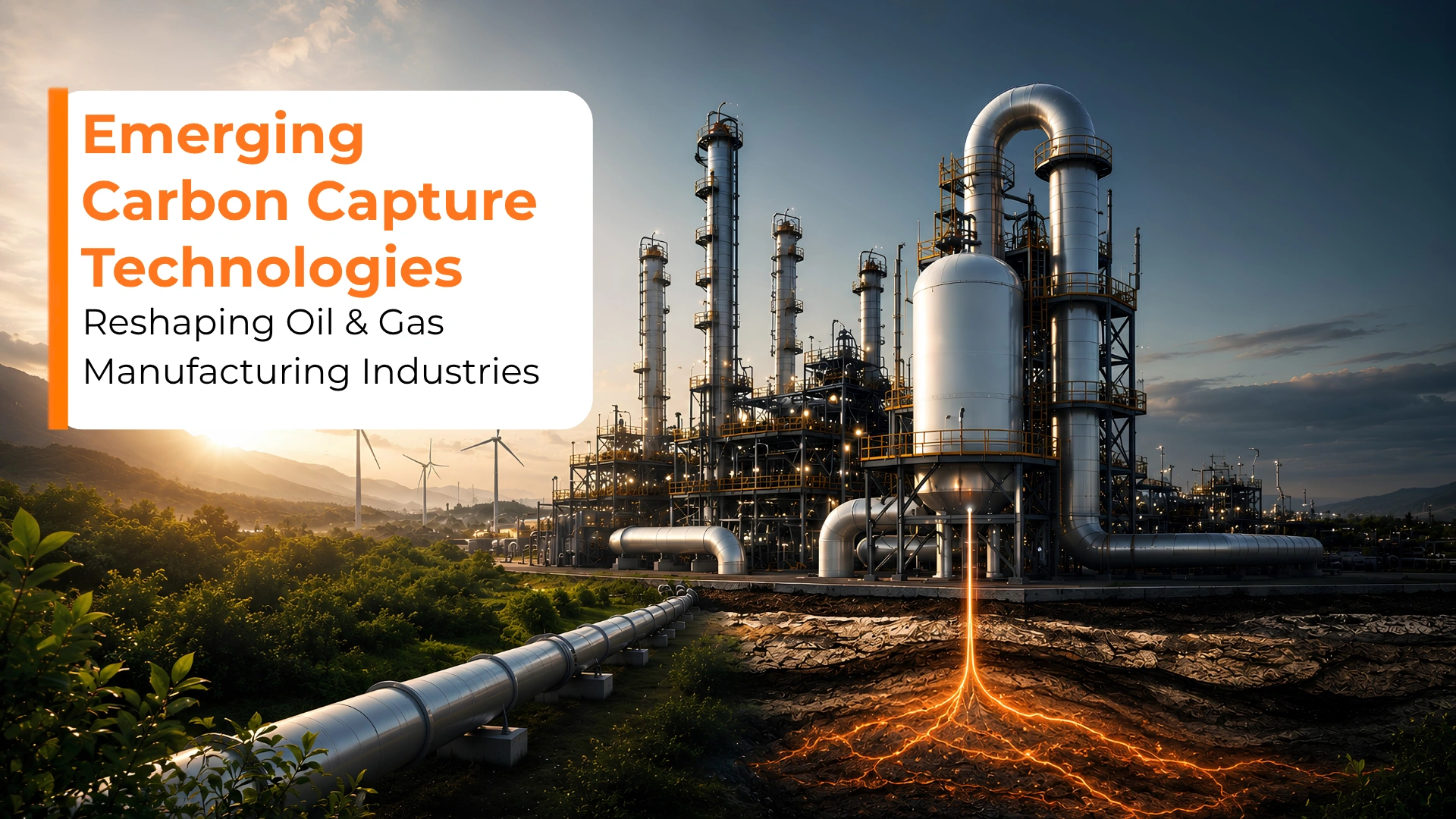
This is where carbon capture technologies are becoming increasingly relevant as a critical lever in the broader decarbonization journey.
Why Carbon Capture Has Become Important
For many industrial facilities, reducing emissions is not just limited to improving the energy efficiency of their plants. Yes, these efforts are important, but they often address a very small portion of the overall emissions profile.
At the same time, global emissions are still a significant challenge. According to the International Energy Agency (IEA) Global Energy Review 2025, energy-related CO2 emissions had reached a record 37.8 gigatons in 2024.
As industries continue to expand production, reducing emissions from sectors such as chemicals, refining, steel, and cement remains a critical priority.
Therefore, companies are increasingly focusing on:
- Tracking progress toward long-term decarbonization targets
- Improving visibility into emissions across operations
- Strengthening alignment with net-zero commitments and reporting frameworks
- Identifying reduction opportunities apart from the conventional optimization
This shift is also driving interest in carbon capture solutions forward. It helps in addressing emissions that cannot be eliminated through operational improvements alone.
Emerging Carbon Capture Technologies Changing the Industry
As several approaches are gaining attention, the steps to improve carbon capture technologies are also evolving. However, successful implementation requires more than selecting the right technology. Organizations need to understand their emissions profile, evaluate opportunities, and then build a roadmap for deployment.
Direct Air Capture (DAC) is currently one of the most popular technologies for carbon capture. In this process, specialized air filters capture carbon dioxide directly from the air. After that, it is converted into natural products.
We at Ingenero implement the following carbon capture technologies to improve the effectiveness and performance of facilities.
- Performance Tracking– With evolving technologies, organizations need a clear understanding of where the emissions originate. For that, we provide real-time monitoring systems, sustainability dashboards, and performance tracking tools to identify emission hotspots and prioritize opportunities that support carbon capture technologies and net-zero goals.
- Digital Twins– Successful carbon capture solutions require a clear understanding of process performance and operational impact. We leverage digital twins to evaluate different scenarios, predict outcomes, and quantify potential emission reductions before deploying carbon capture technologies.
- Root Cause Analysis- Our systematic approach digs into operational challenges through advanced tools like simulation models and techniques such as Kepner-Tregoe, fault tree, and barrier. This helps us identify the root cause of energy losses and uncover opportunities to strengthen long-term decarbonization efforts.
- Augmented Intelligence- It’s a hybrid approach combining advanced analytics, predictive models, and engineering expertise to generate sustainability-driven insights. This helps organizations make faster decisions, optimize performance, and maximize the effectiveness of their carbon capture solutions as they progress toward net-zero targets.
Making Carbon Capture Work in Practice
Carbon capture solutions are often considered as a plug-in for decarbonization technologies, but in reality, their performance largely depends on the host facility’s efficiency.
Higher energy consumption in base operations directly impacts the cost and complexity of capture systems. That’s why industries are combining reduction strategies with engineering-led optimization approaches.
For example, a petrochemical facility in Jubail, KSA, partnered with us at Ingenero for improving capacity, asset utilization, and energy performance. To achieve this, our team continuously analyzed plant data utilizing Data Twin models.
The initiative delivered:
- Improved energy performance and asset utilization
- More than $75 million in savings between the years 2011 and 2019
- Identification of bottlenecks for sustained 100% utilization
The Road Ahead
The future of industrial decarbonization will not depend on a single solution. Carbon capture technologies will evolve and become more efficient and adaptable to demanding industrial conditions.
However, success will also depend on how effectively they are combined with process understanding, operational performance, and system-level optimization.
For large-scale decarbonization projects, organizations are effectively seeking help from carbon footprint consultants like Ingenero to better understand emission sources and prioritize opportunities for carbon capture.
FAQ’s
1. What are carbon capture technologies?
Carbon capture technologies are systems designed to capture CO2 emissions from industrial processes before they are released into the atmosphere. They help industries to reduce their environmental impact.
2. How does carbon capture support manufacturing industries?
Carbon capture solutions support manufacturing facilities to reduce process-related emissions while maintaining production efficiency and supporting sustainability goals.
3. What is Direct Air Capture?
Direct Air Capture (DAC) is a technology used to remove carbon dioxide directly from the air using specialized capture systems for reuse and storage.
4. Why is root cause analysis important before carbon capture deployment?
Root Cause Analysis is important because it identifies the underlying causes of inefficiencies and emissions, ensuring that carbon capture technologies are implemented effectively.
5. How can Ingenero help with carbon capture and decarbonization?
As a carbon footprint consultant, Ingenero helps organizations to evaluate emissions, identify opportunities for improvement, and implement solutions through its engineering expertise and digital technologies.