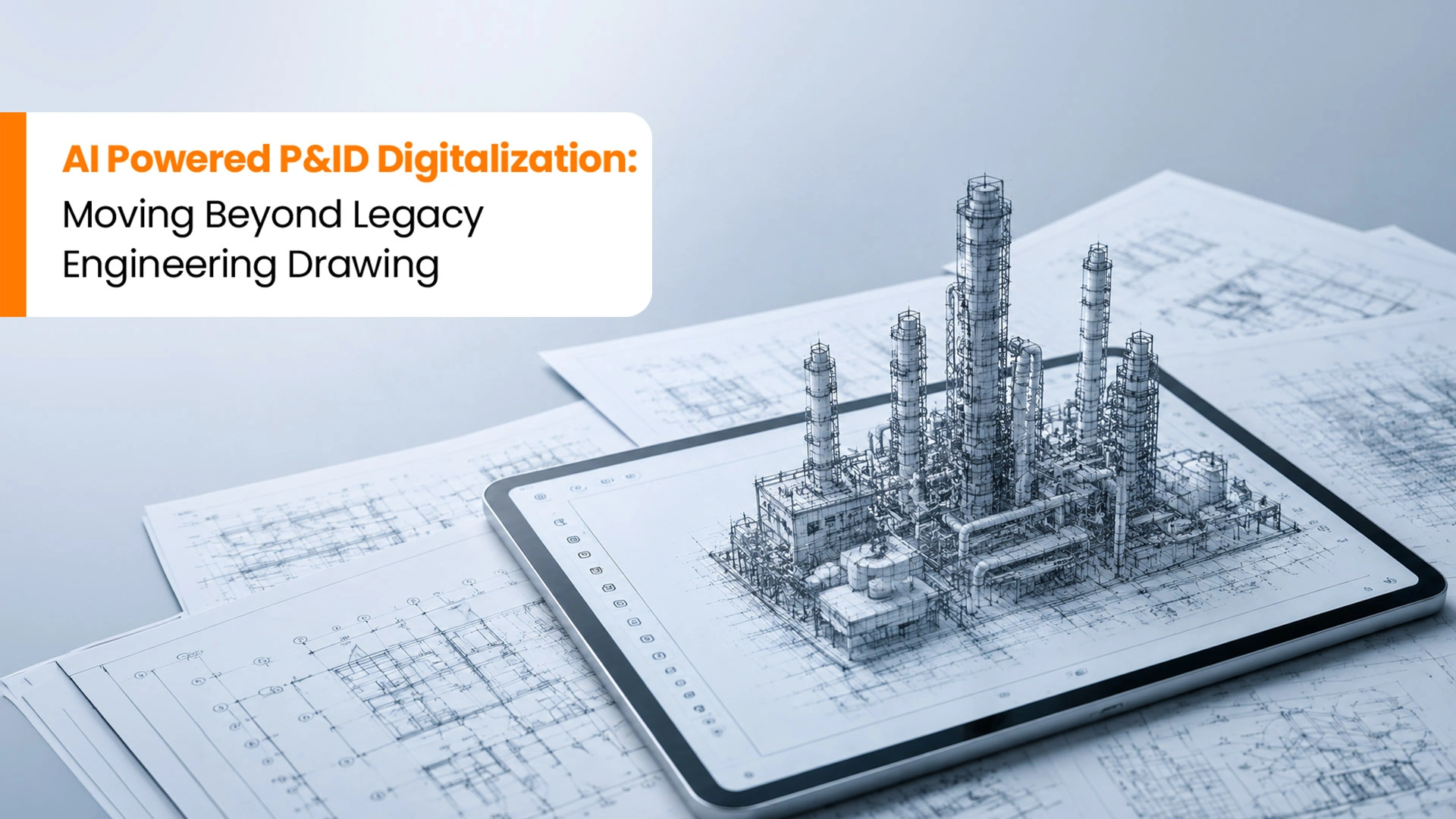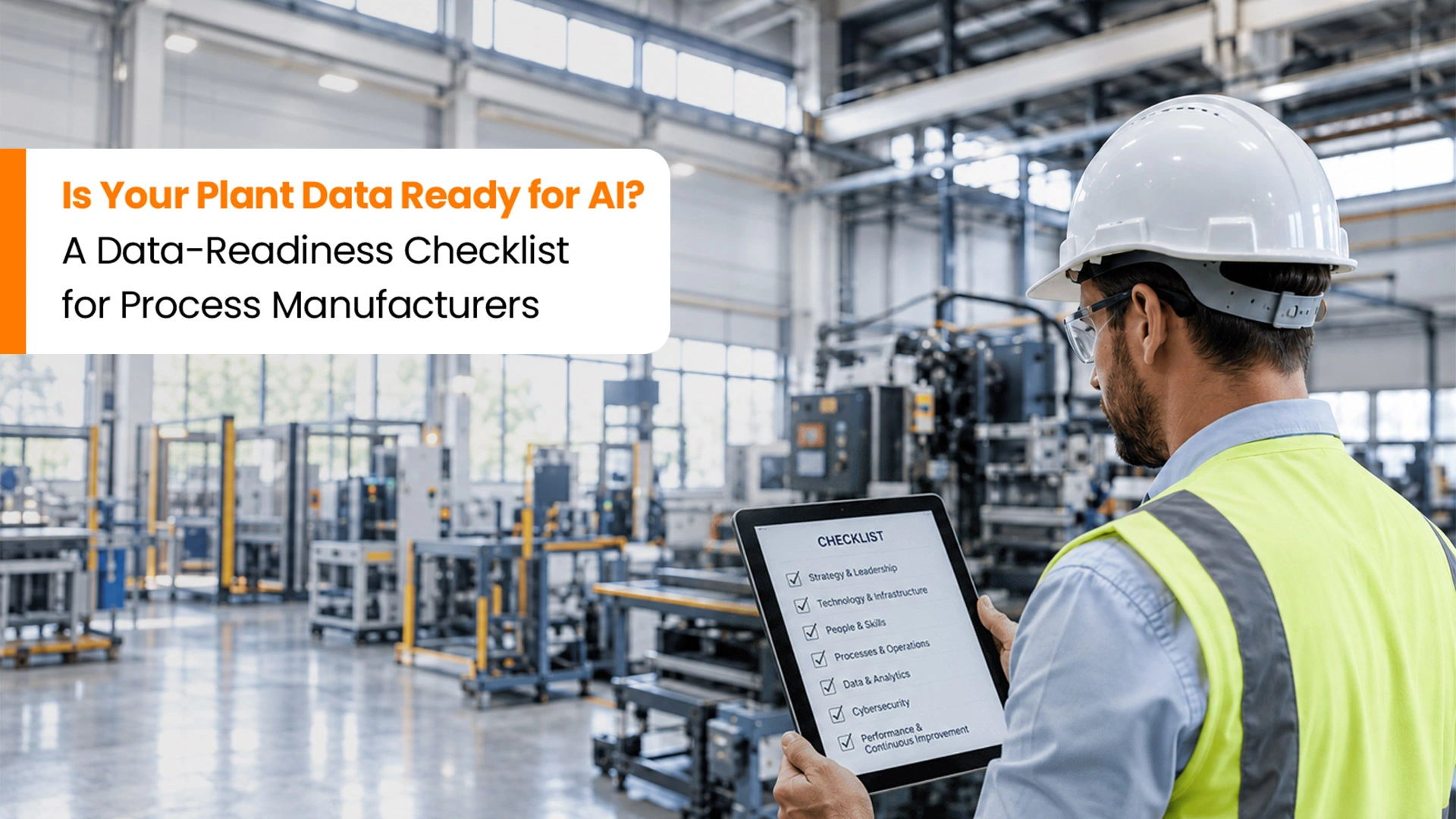
Most factories aren’t ready for artificial intelligence in 2026. It’s not about the type of AI model you choose. The problem is that important information is spread out across different sources like paper logs, old systems that don’t work together, and other disconnected records. For AI to work well in operations and industry, it needs to be able to look at and trust the data it’s given. If your production records are still handwritten on a clipboard, having a fancy AI model won’t solve the issue. The AI can only make decisions based on the data it can see and trust. So, if your data is all over the place and not in a format that the AI can understand, it won’t be able to work properly.
AI data readiness for manufacturing isn’t a software category you buy off a shelf. It’s a state your plant’s data has to be in before any of it works. This checklist is built for plant managers, digital transformation leads, and operations directors who are being asked “are we ready for AI?” and need a real answer, not a guess. Work through it honestly. Every “no” is a gap that will block value from any GenAI copilot or industrial AI agent you deploy later.
The 10-Question AI Data-Readiness Diagnostic for Manufacturing
1. Digitization at source. Are batch sheets, quality checks, downtime logs, and shift handoffs captured digitally at the point of work, or transcribed later from paper?
2. Machine data escape. Are your machines talking to each other? Do your Programmable Logic Controllers (PLCs), Supervisory Control and Data Acquisition (SCADA) systems, and Distributed Control Systems (DCS) automatically send important information like counts, states, faults, and cycle times to a central platform? Or are you still relying on someone to manually pull reports, which can be time-consuming and prone to errors?
3. System connectivity. Do ERP, MES, LIMS/QMS, and CMMS exchange data on their own, or is someone re-keying the same numbers into three different systems every shift?
4. Data latency. Is your operational data current enough to actually drive a decision, meaning minutes to hours, not the day-old numbers in yesterday’s report?
5. Contextualization. Are your tags and data streams mapped to the assets, units, and process context they belong to, so a model can reason about why something happened, not just what the reading was?
6. Historical depth. Do you have at least six to twelve months of clean, time-aligned historian data on your critical assets to train a baseline or catch an anomaly?
7. Data quality controls. Does someone own data quality for your key process variables? Are there validation rules and drift monitoring in place, or does bad data just flow downstream unchecked?
8. Workflow integration. Can an AI-generated recommendation land inside a system your team already uses, like a work order in the CMMS or a setpoint suggestion in the DCS, with a human approving it before it acts?
9. Governance and security. Do you have role-based access, audit logs, and a safety classification for any AI system that touches a physical process?
10. The trace test. Let’s try to track a real production lot from start to finish, all in one go. Can we pull up a specific lot right now and follow it through every stage, from when it first arrives to when it’s finally shipped out? This would mean tracing it through receiving, then production, followed by quality control, and finally shipping, all in a single step.
If you said no to two or more of the first five questions, then buying a GenAI platform shouldn’t be your top priority right now. Instead, you should focus on getting your own data in order – that means digitizing it, connecting it all together, and making sure it’s unified. You’re already creating a lot of data every shift, so let’s get that sorted first.
What AI-Ready Actually Looks Like on the Plant Floor
Plants that successfully move beyond pilot projects often have certain characteristics in common. For instance, their operational technology (OT) and information technology (IT) systems are integrated, which prevents data from being isolated in a single control room. Additionally, the artificial intelligence (AI) layered on top is designed to be compatible with the plant’s existing historian, rather than requiring a complete replacement. This approach is similar to Ingenero’s applied AI methodology, where solutions are built to be compatible with any data historian, allowing for a focus on connecting and contextualizing data rather than deciding on a specific platform to standardize on first. This flexibility enables plants to leverage their existing infrastructure and avoid costly overhauls, making it easier to scale up their AI initiatives. By taking a historian-agnostic approach, plants can ensure that their data is accessible and usable, regardless of the underlying platform, and make the most of their AI investments.
The scale this works at is real. Ingenero’s applied AI platforms currently analyze more than 20 million data points daily across client operations, drawing on more than 500 applied AI use cases and over 16 million process engineering manhours delivered across oil and gas, petrochemical, refining, and power and utilities operations.
On top of that foundation, the AI itself takes two forms. GenAI copilots ground answers in a plant’s own documents, P&IDs, inspection records, and maintenance histories, so an operator gets a response sourced from that plant, not a generic model guess. Industrial AI agents go a step further and take governed action across ERP, SCADA, and CMMS, which is exactly why the data and safety guardrails underneath them matter more than the model on top.
Why Most Manufacturers Get Stuck Here
The problem isn’t that plant teams lack ambition, it’s that they often struggle to connect the dots. They know that artificial intelligence can help reduce downtime, detect potential yield losses, and identify quality issues before they become major problems. However, the various systems they use, such as DCS, CMMS, and ERP, don’t communicate with each other seamlessly, making it difficult to query data across these systems. The solution to this issue isn’t just about buying new software, but rather about doing the hard work of data engineering and integration, which is specific to each plant’s unique needs. Unfortunately, this crucial step is often overlooked when teams are under pressure to quickly demonstrate the benefits of AI, and it’s usually the first thing to get skipped in the process.
AI in the Oil and Gas Industry: The Same Rules, Higher Stakes
Everything above applies to a refinery or an upstream facility, but digitalization in the oil and gas industry adds a layer most discrete manufacturers don’t deal with: distributed assets, remote sites, and safety systems where a bad AI recommendation isn’t just a quality escape, it’s a hazard.
Artificial intelligence in the petroleum industry already runs in production, not just in pilots. Ingenero’s oil and gas use cases show how applying AI across refinery production processes to catch drift and anomalies before they affect output. Underneath those use cases sit the same building blocks the diagnostic above tests for: hybrid AI models that combine machine learning with first-principles process knowledge, soft sensors that flag drift before it becomes a failure, and real-time analytics built to resist false positives, which matters when an alert can trigger a shutdown.
Where AI in the oil and gas industry differs from discrete manufacturing is governance. Upstream, midstream, and downstream operations all carry safety classifications that a typical plant floor doesn’t. Any industrial AI agent recommending a setpoint change or flagging a process anomaly needs an audit trail and a human in the loop before it acts, not after. That’s not a constraint on AI adoption, it’s what makes it possible to trust at all.
Get a Readiness Scorecard Built for Your Plant
Identifying the gaps in your system is one thing, but filling them in the right order, without disrupting your operations, is a whole different story. That’s where Ingenero comes in – we specialize in helping oil and gas, petrochemical, refining, and power and utilities companies tackle this challenge. With over 500 real-world AI use cases under our belt and more than 16 million hours of process engineering expertise, we’ve got the know-how to get the job done. If you’re curious about our track record, you can take a look at our knowledge base, which features actual use cases from the oil and gas, petrochemical, and refining industries. This will give you a better idea of what we can do before you even get in touch with us.
We’d love to help you get started. Please share with us the technology you’re currently using, such as DCS/SCADA, MES, ERP, CMMS, and data lake. Also, let us know the two biggest challenges you’re facing right now – is it unexpected downtime, loss of production, or issues with quality? Our team at Ingenero will work with you to create a customized readiness scorecard and pilot specification that fits your specific needs. This will help us understand how to best support your operation and provide the most effective solutions.
Discuss your plant’s artificial intelligence data preparation with Ingenero →
FAQs
1. So, what does it mean for a manufacturing plant to be “AI data ready”?
Simply put, it means that the plant’s data is collected and stored in a digital format from the very start, and that it can flow smoothly and automatically between different systems like ERP, MES, LIMS/QMS, and CMMS. This data also needs to be linked to the specific assets and processes it relates to. It’s not about having a particular platform or tool, but rather about getting your data into a certain state. A plant can be ready for AI without actually using any AI tools, and on the other hand, it can have lots of AI tools but still not be ready if its data is all over the place and not well-organised.
2. Why are most process plants still not AI-ready in 2026?
Because operational data is often trapped in paper logs, disconnected historians, and systems that don’t talk to each other. Even when a DCS or SCADA system is capturing good data, it frequently isn’t reaching a central platform automatically, which means GenAI copilots and industrial AI agents don’t have anything reliable to reason over.
3. What’s the difference between GenAI for operations and industrial AI agents?
GenAI copilots generate answers grounded in a plant’s own documents, such as P&IDs, inspection records, and maintenance histories, so operators get plant-specific responses rather than generic ones. Industrial AI agents go further and take governed action inside systems like ERP, SCADA, and CMMS, for example, generating a work order or flagging a process anomaly, which is why the data quality and safety guardrails behind them matter as much as the model itself.
4. To get the most out of AI models for plants, you need a decent amount of historical data.
Generally, having six to twelve months of clean and organised data on important equipment is a good starting point. This amount of data allows you to train a basic model and start identifying unusual patterns. With less data, it’s tough for the models to understand what’s normal and what’s not, making it harder to spot real issues.
5. Does artificial intelligence in the petroleum industry work differently than in general manufacturing?
The data foundation is the same: contextualised, connected, historian-backed data. What differs is governance. Oil and gas operations carry safety classifications that a typical plant floor doesn’t, so an industrial AI agent recommending a setpoint change or flagging a process anomaly needs an audit trail and a human-in-the-loop approval step before it acts, not after.
6. What are some real examples of AI already running in oil and gas operations?
Ingenero’s oil and gas use cases include applying AI across refinery production processes to catch drift and anomalies before they affect output. These run on hybrid AI models that combine machine learning with first-principles process knowledge, along with soft sensors and real-time analytics built to resist false positives, since a false alert can trigger a shutdown.
7. Where should a plant start if it fails most of the readiness checklist?
Start with the first five questions on digitisation, machine data escape, connectivity, latency, and contextualization. Two or more “no” answers there means the priority is digitising, connecting, and unifying existing data, not evaluating GenAI vendors. Buying AI software before that foundation is in place typically just adds another disconnected system.
8. Ingenero can help get your AI data in shape.
They’ve worked with lots of big industries like oil and gas and petrochemicals, and have done over 500 AI projects. Their approach is special because it can work with the systems you already have, so you don’t need to start from scratch. If you share what you’re currently using and what’s not working, Ingenero’s team can help you figure out how ready you are for AI and even create a plan to get you started. They’ll work with you to build a scorecard to see how ready you are and come up with a pilot plan that’s just for your operation. This way, you can make the most of your data and get the benefits of AI without having to completely overhaul your existing systems.